
Posted by Red Barn Tradition on 23rd Sep 2026
How to Make Your Handmade Soap Last Longer
How to Make Your Handmade Soap Last Longer
A few simple habits can help a well-cured handmade tallow bar stay firm, dry, and useful for longer.
A beautiful handmade soap bar should be used.
But that does not mean you want it disappearing unnecessarily quickly.
One of the advantages of a firm, well-cured tallow soap is that it can hold up exceptionally well during everyday use.
The key is caring for it properly.
Fortunately, extending the life of handmade soap does not require complicated equipment.
THE MOST IMPORTANT RULE
Let the bar dry between uses.
Why Water Shortens the Life of Soap
Soap is designed to interact with water.
When water reaches the surface of the bar, some of the soap dissolves and becomes available for lathering.
That is exactly what we want while washing.
The problem occurs when the bar stays wet long after you have finished.
If soap remains in standing water, the surface continues to soften.
The next time you pick it up, more of the bar may wash away than necessary.
That means drainage is essential.
Use a Proper Soap Dish
A good soap dish should not simply look beautiful.
It needs to function.
Look for a design that allows water to move away from the soap.
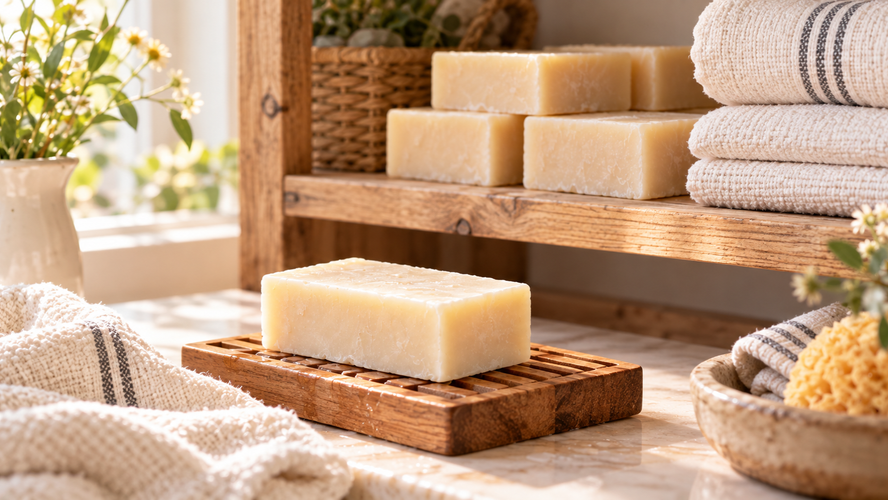
Slatted wooden dishes are especially useful because they elevate the bar and allow airflow underneath.
Raised ceramic dishes can also work well when they include sufficient drainage.
Whatever style you choose, avoid a dish that allows the bar to sit in a puddle.
Give the Bar Air
Airflow helps the surface of handmade soap dry.
If possible, do not press the bar directly against a wet shower wall or keep it enclosed while damp.
Place it somewhere water can drain and air can circulate.
The faster the surface dries, the sooner the bar returns to its firm state.
Keep It Out of Direct Shower Spray
Your soap does not need to be rinsed continuously while you shower.
A shelf positioned slightly outside the direct stream is ideal.
Pick up the soap when you need it.
Create lather.
Rinse as needed.
Then return it to its dry resting place.
This small change can help prevent unnecessary water exposure.
Do Not Soak the Bar
Some people place soap in a basin or leave it submerged while bathing.
That will naturally soften it much faster.
Wet the bar briefly.
Create your lather.
Then return it to the soap dish.
Soap needs water to work, but it does not need to soak.
Consider a Soap Saver Pouch
A sisal soap pouch can serve two purposes.
It can help create lather, and it can make very small soap pieces easier to use.
When the bar becomes too small to hold comfortably, place the remaining piece in the pouch.
Several tiny soap slivers can even be combined.
Just remember that the pouch needs to dry too. Do not leave a wet soap-filled pouch sitting in standing water.
Use a Natural Sea Sponge or Washcloth
You do not necessarily need to keep rubbing the bar throughout the entire shower.
Instead, create lather on a damp natural sea sponge or washcloth.
Once you have enough, return the soap to the dish and continue washing with the lathered accessory.
This reduces the amount of time the bar remains wet and in active use.
Rotate Soap Bars
If you enjoy different scents, rotating between two bars can provide each one with additional drying time.
Pine Tar one day.
Unscented the next.
Or keep one soap for morning showers and another for evening use.
This is not necessary, but it can be a convenient option for customers who already enjoy having several Red Barn varieties available.
Store Backup Bars Dry
Extra soap should not be stored in a damp bathroom if there is a better option available.
A cool, dry linen closet or shelf can be ideal.
Keep unused bars away from standing moisture and excessive heat.
When you finish your active bar, your next one will be ready.
Cut a Large Bar If You Prefer
Some people prefer holding a smaller piece of soap.
If your bar feels larger than you need, cutting it into portions can work.
Use one portion and keep the remaining section stored dry.
Because only part of the original bar is exposed to repeated water, the remainder stays untouched until needed.
Clean the Soap Dish Occasionally
Soap residue can build up underneath the bar.
If drainage channels become blocked, water may begin collecting.
Rinse and clean your dish periodically.
Allow it to dry before replacing the soap.
It is a tiny maintenance task that helps the entire system work better.
Start With a Firm, Well-Cured Soap
Storage cannot completely compensate for a poorly cured bar.
The soap itself matters too.
Grass-fed beef tallow contributes firmness and durability to Red Barn soap.
Combined with appropriate curing, it creates the kind of substantial bar we want for everyday use.
That strong foundation makes proper care even more worthwhile.
Do You Need to Baby Handmade Soap?
No.
Handmade soap is still an everyday product.
You do not need to carefully handle it like a fragile decoration.
The goal is simply to avoid unnecessary soaking.
Use it.
Enjoy it.
Put it somewhere sensible afterward.
That is enough.
Small Habits Add Up
You may not notice a dramatic difference after one shower.
But over the life of the soap, these habits can add up.
A bar that dries fully between uses usually holds up better than one sitting constantly wet.
This makes handmade soap more economical and means you get to enjoy each bar longer.
Make the Most of Every Red Barn Bar
At Red Barn Tradition, we put time into making and curing our tallow soap.
Once the bar reaches your home, a little simple care can help preserve that work.
Use a draining dish.
Allow airflow.
Keep the bar out of standing water.
Enjoy it until the very last piece.
Build a Better Soap Routine
Explore handcrafted tallow soaps, natural sea sponges, sisal soap pouches, and everyday skin goods from Red Barn Tradition.
SHOP TALLOW SOAP