Posted by Red Barn Tradition on 8th Sep 2026
Understanding the Ingredients in Red Barn Tallow Soap
Understanding the Ingredients in Red Barn Tallow Soap
A bar of soap can look simple on the outside, but every ingredient inside it has a purpose.
At Red Barn Tradition, we believe customers should be able to understand the products they use every day. That is one reason we like traditional soapmaking: the basic process is straightforward, the ingredients have clear roles, and the finished bar is designed to be useful rather than unnecessarily complicated.
Our soaps vary by scent and formula, but many of them begin with the same traditional foundation: grass-fed beef tallow.
From there, we may add ingredients such as oatmeal, goat milk, honey, pine tar, essential oils, charcoal, salt, coffee, turmeric, or other carefully selected additions depending on the bar.
Here is a closer look at what those ingredients do and why they appear in Red Barn soaps.
Grass-Fed Beef Tallow
Grass-fed beef tallow is the foundation of many Red Barn soap recipes.
Tallow is rendered and purified beef fat. In traditional soapmaking, it is valued because it helps create a firm, durable bar with a creamy lather.
Different fats and oils contribute different qualities to soap, and tallow is especially useful when the goal is a bar that feels substantial and holds up well during everyday use.
That is one reason it has been used in soapmaking for generations.
For Red Barn, tallow also fits the larger identity of the brand: traditional, practical, and rooted in everyday usefulness.
Sodium Hydroxide, Also Known as Lye
Lye is one of the most misunderstood ingredients in traditional soapmaking.
For hard bar soap, sodium hydroxide is combined with fats and liquid to create a chemical reaction called saponification.
That reaction is what turns the original ingredients into soap.
The important thing to understand is that traditional soap cannot be made without an alkali such as sodium hydroxide.
A carefully formulated recipe uses the proper amount needed for the fats in the batch.
Once saponification has taken place and the soap has been properly made and cured, the finished product is soap—not simply a mixture of tallow and lye.
This is one of the reasons precise measurements and careful formulation are so important.
Distilled Water
Water may seem like the least interesting ingredient in a soap recipe, but it plays an important role in the soapmaking process.
It helps dissolve the sodium hydroxide and allows the ingredients to combine properly during production.
As the finished soap cures, much of the water gradually evaporates.
That evaporation is part of what helps the bar become firmer over time.
This is also why freshly made soap is softer than a fully cured bar.
Colloidal Oatmeal
Oatmeal has a long history in bath and body products and brings a traditional character to handmade soap.
At Red Barn, colloidal oatmeal appears in select formulas, including our Pine Tar soap.
Its fine texture allows it to blend more evenly throughout the soap than large pieces of oatmeal would.
It also complements the rustic appearance and feel of traditional soap.
For us, oatmeal fits naturally with ingredients such as pine tar, goat milk, and honey because it reinforces the farmhouse-inspired character of the collection.
Pine Tar
Pine tar gives one of our most recognizable soaps its distinctive look and character.
It is dark, smoky, and unmistakably rustic.
Pine tar has been used historically in a range of practical products, and today it remains popular among customers who enjoy old-fashioned, outdoors-inspired soap.
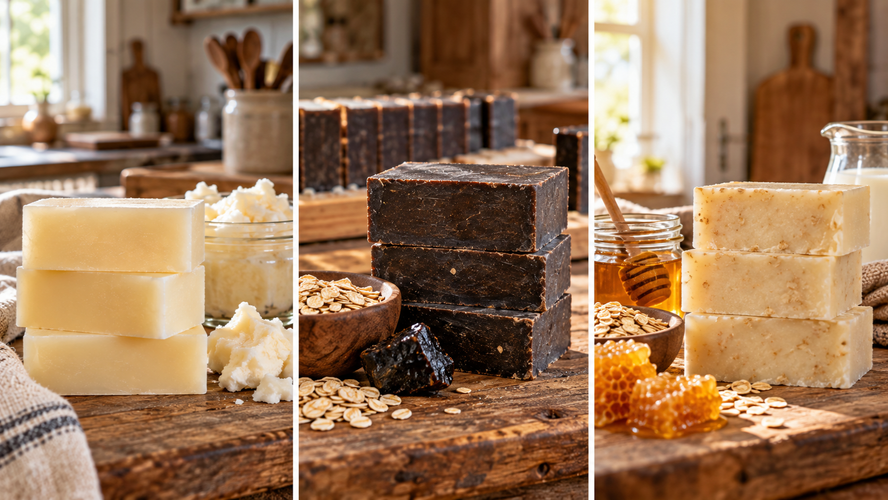
Our Pine Tar Tallow Soap contains 10% pine tar, which gives the bar its characteristic deep tone and bold personality.
It is very different from our pale unscented tallow bars, but both begin from the same traditional soapmaking foundation.
Pine Essential Oil
Pine essential oil complements the pine tar in our Pine Tar soap.
It contributes a fresh, woodsy aroma that fits the outdoors-inspired character of the bar.
Essential oils are concentrated aromatic oils derived from plant material, and they are used in some soaps primarily to create scent.
Not every Red Barn soap contains essential oils, and our Unscented Tallow Soap is intentionally made without added fragrance.
That gives customers the choice between simple unscented bars and more aromatic options.
Goat Milk
Goat milk is another traditional ingredient used in artisan soapmaking.
It appears in our Oatmeal Goat Milk & Honey Soap and contributes to the identity of that bar.
Goat milk gives the formula a distinctly farmhouse-inspired character and pairs naturally with ingredients such as oatmeal and honey.
It is one of those ingredients that feels especially at home within the Red Barn collection because it connects well with the heritage-style approach behind the brand.
Honey
Honey is another ingredient found in our Oatmeal Goat Milk & Honey Soap.
It adds to the warm, familiar personality of the bar and works naturally alongside oatmeal and goat milk.
When we think about this soap, the combination immediately brings to mind simple pantry and farmhouse ingredients rather than complicated laboratory-style formulas.
That is exactly the feeling we want this bar to have.
Activated Charcoal
Activated charcoal gives soap a bold, dark appearance.
It is featured in our Sea Salt & Activated Charcoal Tallow Soap, where it creates a strong visual contrast against the lighter tones found in many of our other bars.
Charcoal soap stands out immediately on a soap dish.
It is a good example of how a single additional ingredient can completely change the appearance and personality of a soap while still keeping the underlying tallow foundation.
Sea Salt and Himalayan Salt
Salt can also be incorporated into handmade soap.
Salt bars often feel noticeably different from standard soap bars because salt can influence the texture and hardness of the finished product.
At Red Barn, salt allows us to create soaps with a different visual and tactile character while staying within the same traditional product family.
It also fits naturally with the simple, mineral-inspired look we want these bars to have.
Coffee
Coffee is familiar, warm, and instantly recognizable.
That makes it a natural fit for a rustic handmade soap collection.
In soap, coffee-inspired ingredients or fragrance can create a bar with a very different personality from fresh mint, pine, lavender, or unscented varieties.
For customers who already love coffee, it can also make a fun and distinctive gift.
Turmeric
Turmeric is best known as a kitchen spice, but it also appears in artisan soaps.
At Red Barn, it helps give our Lemon Turmeric bar its distinctive identity and warm color character.
Paired with lemon, it creates a soap that feels brighter and more energetic than our deeper woodsy or earthy varieties.
This variety is part of what makes a tallow-based collection interesting.
The same traditional soap foundation can be expressed in many different ways.
Lavender, Cedarwood, Spearmint, Eucalyptus, Sandalwood, and Patchouli
Scent is one of the easiest ways to change the personality of a soap.
Lavender Cedarwood combines softer floral notes with a woodsy base.
Spearmint Eucalyptus creates a fresher, cooler scent profile.
Sandalwood Patchouli moves in a warmer, earthier direction.
Each one appeals to a different preference.
The goal is not for every customer to love every scent.
The goal is to offer enough variety that customers can find a soap that feels right for their own routine.
Why We Keep the Foundation Consistent
Even though Red Barn offers different ingredients and scent profiles, we like having grass-fed tallow as the common thread across much of the collection.
It gives the brand consistency.
One bar may look dark and rugged.
Another may be pale and unscented.
Another may contain goat milk, oatmeal, or salt.
But the traditional tallow foundation keeps the collection connected.
Reading a Soap Ingredient List
When choosing handmade soap, it is worth taking a moment to read the ingredient list.
Ask yourself:
What is the main soapmaking fat?
Is the bar scented or unscented?
Are additional ingredients included?
Do those ingredients match what you personally prefer?
There does not have to be one “perfect” soap for everyone.
A good product is one that fits your preferences and routine.
Ingredients With a Purpose
At Red Barn Tradition, our goal is not to make ingredient lists complicated just for the sake of sounding impressive.
We prefer ingredients that give a bar a clear identity.
Tallow provides the foundation.
Oatmeal adds traditional character.
Pine tar creates a rugged bar.
Goat milk and honey create a warmer farmhouse feel.
Charcoal and salt create something visually bold.
Essential oils and fragrances allow us to create different scent experiences.
Each ingredient should contribute something meaningful to the finished soap.
That is the Red Barn approach: traditional soapmaking, useful products, and ingredients chosen with purpose.
Visit RedBarnTradition.com to explore our handcrafted grass-fed tallow soaps and find the bar that fits your routine.