
Posted by Red Barn Tradition on 1st Sep 2026
Why Grass-Fed Tallow Makes a Beautiful Bar of Soap
Why Grass-Fed Tallow Makes a Beautiful Bar of Soap
Not every bar of soap begins with the same ingredients, and not every bar feels the same in your hands.
At Red Barn Traditional Skin Goods, grass-fed beef tallow is at the heart of many of our handcrafted soaps. We choose it because it creates a firm, long-lasting bar with a rich, creamy lather—qualities that have made tallow a trusted soapmaking ingredient for generations.
Tallow is traditional, practical, and remarkably well suited to everyday soap. It gives us a dependable foundation while allowing us to create a collection of bars with different scents, textures, and personalities.
What Is Beef Tallow?
Beef tallow is purified, rendered beef fat.
Rendering removes moisture and impurities so the tallow can be used in products such as soap, candles, and other traditional goods. Although tallow has recently received renewed attention, it is not a new or trendy ingredient. Families and soapmakers have used animal fats for centuries to create practical household products.
Before modern manufacturing made countless specialized oils and synthetic ingredients widely available, people often worked with the materials they had nearby. Animal fats were valuable resources, and using them to make soap was a sensible way to turn something available into something useful.
That history is part of what makes tallow so appealing to us. It connects a modern bathroom with an older, more resourceful way of making everyday necessities.
Why Tallow Works So Well in Soap
Soapmakers choose fats and oils based on the qualities they contribute to a finished bar. Olive oil, coconut oil, shea butter, and other ingredients each bring something different to a recipe.
Tallow has its own distinctive strengths.
When properly formulated, tallow helps create a bar that is:
- Firm and durable
- Long lasting
- Smooth and comfortable to hold
- Rich and creamy when lathered
- Well suited for everyday washing
A tallow soap bar generally feels substantial rather than soft or quick to dissolve. It holds its shape well and can provide many washes when stored properly.
That durability is one of the reasons tallow has remained a favorite among traditional soapmakers.
A Firm Bar That Lasts
One of the first things many people notice about tallow soap is its firmness.
A soft bar can become mushy when it sits in water or remains in a damp shower. A properly cured tallow bar is naturally harder, which helps it maintain its shape and last longer between uses.
Of course, storage still matters. Even the best soap will soften if it sits in standing water.
To extend the life of your bar:
- Place it on a draining soap dish.
- Keep it away from direct streams of water.
- Allow it to dry completely between uses.
- Store extra bars in a cool, dry place.
A little airflow can make a significant difference. When a bar is allowed to dry between washes, you get more use from it and avoid wasting soap down the drain.
Creamy, Comfortable Lather
Tallow is also valued for the type of lather it creates.
Rather than producing only a light, airy foam, a well-made tallow soap can develop a dense, creamy lather. It feels smooth in your hands and gives the bar a satisfying, old-fashioned character.
To build a good lather, wet the bar and work it between your hands, use a washcloth, or lather it directly against your skin. The experience can vary depending on the recipe, water quality, and how the bar is used, but tallow provides a dependable foundation for a rich cleansing experience.
For many people, the lather is part of what makes traditional soap feel different from liquid body wash or mass-produced cleansing bars.
Why Grass-Fed Tallow?
At Red Barn, we choose grass-fed beef tallow because it fits the values behind our brand.
We want our products to feel traditional, practical, and thoughtfully made. Grass-fed tallow gives us a recognizable foundation that reflects that approach.
Our goal is not to create complicated products with endless ingredients. Instead, we focus on handcrafted soap bars that are useful, enjoyable, and rooted in a simpler tradition.
Choosing grass-fed tallow is part of that commitment. It gives our soap collection consistency while allowing each bar to have its own character.
Simple Ingredients, Thoughtful Craftsmanship
A traditional tallow soap recipe can be remarkably straightforward.
At its foundation, soap is made by combining fats or oils with a carefully calculated amount of sodium hydroxide and liquid. Through a chemical reaction called saponification, those ingredients transform into soap.
Once the soap has been mixed, poured, cut, and fully cured, the finished bar is no longer simply tallow and lye. It has become a new product designed for everyday use.
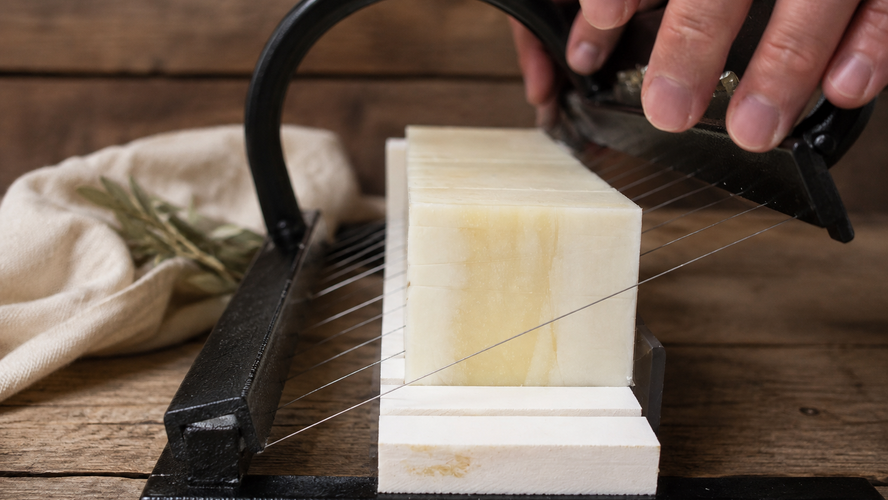
At Red Barn, we take time with each stage of the process. We measure ingredients carefully, pour the soap into molds, cut the bars, and allow them to cure before they are ready for customers.
That patience matters. Curing allows excess water to evaporate and helps the bars become harder, milder, and longer lasting.
A Foundation for Many Different Bars
One of the best things about tallow is its versatility.
It creates a strong foundation for both simple unscented soap and more distinctive scented varieties.
Our Pure Grass-Fed Unscented Tallow Soap is a straightforward example. It keeps the focus on the traditional bar itself, without an elaborate fragrance or unnecessary extras.
For customers who enjoy more personality in their soap, tallow also works beautifully with rustic scent combinations and additional ingredients.
Pine Tar offers a rugged, outdoors-inspired character.
Lavender Cedarwood feels calm, warm, and woodsy.
Spearmint Eucalyptus brings a crisp, refreshing aroma.
Coffee adds a familiar, rich scent.
Sandalwood Patchouli creates a deeper, earthier experience.
The foundation remains traditional, but each bar offers something different.
Does Tallow Soap Smell Like Beef?
This is a common question for people who are new to tallow products.
Properly rendered tallow should not make a finished soap bar smell like beef. An unscented bar typically has a mild, clean soap aroma. When essential oils or fragrance are included, those scents become the primary character of the finished product.
The quality of the rendering process and the soap formula both matter. Careful preparation helps create a pleasant bar that feels traditional without carrying an unwanted animal-fat odor.