Posted by Red Barn Tradition on 14th Sep 2026
Why Tallow Has Been Used in Traditional Soapmaking for Generations
Why Tallow Has Been Used in Traditional Soapmaking for Generations
Some ingredients become popular for a season. Others remain useful for generations.
Some ingredients become popular for a season.
Others remain useful for generations.
Beef tallow belongs in the second category.
Long before modern body wash, brightly packaged cleansing bars, and specialty bath products became common, people used materials available around them to make practical household necessities. Rendered animal fats were among those valuable materials, and soapmaking became one of the ways they were put to use.
Today, tallow soap may feel like a rediscovered product, but the ingredient itself has a long history.
At Red Barn Tradition, that history is one of the reasons grass-fed beef tallow feels like such a natural foundation for our handcrafted soap collection.
What Is Tallow?
Tallow is rendered fat, most commonly from cattle.
Rendering separates usable fat from moisture and other material, creating a stable fat that historically had many household applications.
Depending on the time and place, tallow could be used for cooking, candles, lubrication, and soapmaking.
For families who raised livestock or lived close to agricultural communities, using the whole animal made practical sense.
Valuable materials were not casually discarded.
They were transformed into useful goods. Soap was one of them.
Why Did Soapmakers Use Animal Fats?
Traditional soapmaking depended heavily on what people could obtain locally.
Today, soapmakers can order oils, fragrances, colorants, and specialty ingredients from almost anywhere.
Earlier generations did not have that luxury.
They worked with local resources.
Where animal fats were readily available, rendered fats became an obvious soapmaking ingredient.
When combined properly with an alkaline substance, those fats could be transformed through saponification into soap.
Over time, makers learned that different fats created different characteristics in the finished bars. Tallow became especially useful because of the firmness and durability it could contribute.
Tallow Creates a Hard Soap Bar
One reason tallow remained popular is simple:
It makes practical soap.
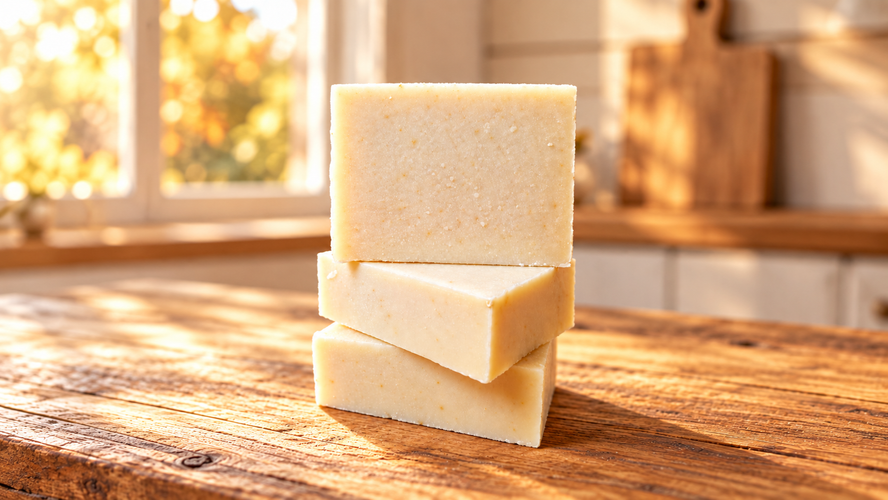
A well-formulated tallow soap generally cures into a firm bar.
That firmness matters during everyday use.
A soft bar can wear down quickly, particularly if it remains wet between washes. A harder bar tends to hold its shape better and can provide many uses when stored on a draining soap dish.
For households making their own necessities, durability had real value. People wanted products to last. That quality is just as useful today.
Tallow Contributes a Creamy Lather
Soap does not need enormous bubbles to provide an enjoyable wash.
Different soapmaking fats contribute different types of lather.
Tallow is especially known for helping create a dense, creamy lather.
That creamy character is one of the things that distinguishes traditional tallow soap from some other bar formulations. It gives the finished soap a substantial, old-fashioned feel that fits naturally with the Red Barn approach.
Traditional Soapmaking Was About Practicality
It is easy to romanticize old-fashioned household skills, but historically, soapmaking was largely practical.
People needed soap. They needed candles. They needed food preserved. They needed clothing repaired.
These tasks were part of ordinary household life.
Tallow soap belongs to that same tradition.
It took something available and transformed it into something useful.
That practical mindset is important to us at Red Barn Tradition.
Our goal is not to create soap that is too decorative to use. We want soap that belongs beside the sink, in the shower, at the cabin, or tucked into the linen closet waiting for the next bar to be needed.
Earlier Soapmaking Was Not Identical to Modern Soapmaking
Although tallow has a long history, modern soapmaking has important advantages.
Historical soapmakers did not always have access to consistently purified sodium hydroxide or precise digital scales.
Alkaline solutions could be made from wood ashes, and their strength could vary.
Modern soapmakers are able to calculate formulas much more precisely.
We understand saponification chemistry. We can accurately weigh ingredients. We can use standardized materials. We can repeat formulas much more consistently.
So when Red Barn talks about traditional soapmaking, we are not suggesting that every historical method should be recreated exactly. We take inspiration from traditional ingredients and principles while using modern knowledge and careful formulation.
Why Tallow Became Less Common in Mainstream Bathrooms
Industrial manufacturing changed the way people purchased household products.
Soap no longer needed to be made at home.
Large companies could manufacture and distribute enormous quantities of soap.
Over time, liquid cleansers, synthetic detergents, body washes, and specialized personal-care products became common.
The bathroom shelf expanded.
Traditional tallow soap became less visible to many consumers.
But it never disappeared completely. Small soapmakers continued using animal fats, and renewed interest in handmade goods has introduced tallow soap to a new generation of customers.
“Some traditional materials remain useful because they genuinely perform well.”
Why People Are Rediscovering Tallow Soap
There is growing interest in products that feel straightforward and connected to a recognizable process.
Many people enjoy knowing who made something.
They appreciate smaller businesses.
They like seeing traditional crafts continue.
And they may prefer products with relatively simple formulas.
Tallow soap fits naturally within that movement.
The appeal is not that everything old must be better. The appeal is that some traditional materials remain useful because they genuinely perform well. Tallow is one of them.
Why Red Barn Chose Grass-Fed Beef Tallow
At Red Barn Tradition, grass-fed beef tallow forms the foundation of many of our soaps.
We chose it because it fits both the performance we want from our soap and the character of our brand.
It helps us create bars that are:
✓ Firm
✓ Durable
✓ Creamy in lather
✓ Practical for everyday use
✓ Rooted in traditional soapmaking
It also provides a consistent foundation for very different soap varieties.
Our Pure Grass-Fed Unscented Tallow Soap keeps things extremely straightforward.
Pine Tar creates something darker and more rugged.
Oatmeal Goat Milk & Honey brings a farmhouse-inspired character.
Other varieties can move toward fresh, earthy, floral, or woodsy scent profiles.
Tallow connects them all.
An Old Ingredient With a Modern Place
There is no requirement that an ingredient be new to be worthwhile.
Sometimes longevity is evidence that something has simply continued to work.
Tallow survived generations of soapmaking because it served a practical purpose.
Today, it can still create a beautiful, useful bar for modern homes.
That combination of tradition and everyday function is exactly what Red Barn Tradition is built around.
We respect the history.
We appreciate the craftsmanship.
And we believe a simple bar of soap can still carry those ideas forward.
Discover Handcrafted Grass-Fed Tallow Soap
Traditional ingredients, small-batch craftsmanship, and practical soap made for everyday use.
SHOP TALLOW SOAP